After the floods and landslides in Aceh, North Sumatra, and West Sumatra, Indonesia, many ecological “experts and observers” emerged, not only to point out the causes of ecological destruction but also to provide critical analysis. In a sense, what they are doing is positive, if not a little too late—if only action had been taken before the disaster, perhaps the situation would be different.
What fundamental principles should we consider in facing ecological issues that have become increasingly prevalent? Where and how can we begin to improve our ecological situation?
Ecological destruction is like cancer. Its symptoms are not always apparent, and sometimes there are none at all. However, if left untreated, it reaches a terminal stage and becomes fatal. Ecological damage is similar. Often, its impact is not immediately apparent until a disaster occurs that claims many lives. Strangely, many people feel at a loss when faced with ecological damage, even though the logic is quite clear: ecological destruction impacts the living creatures that inhabit the environment. Why, then, do so many people fail to understand this?
Martin Buber observes that humans often view their relationship with nature as an I-it relationship. This kind of relationship treats the other as an “it” or an object. When applied to nature, this outlook has negative consequences. Since humans view the natural world as an object, it can be treated carelessly, arbitrarily, and even exploited.
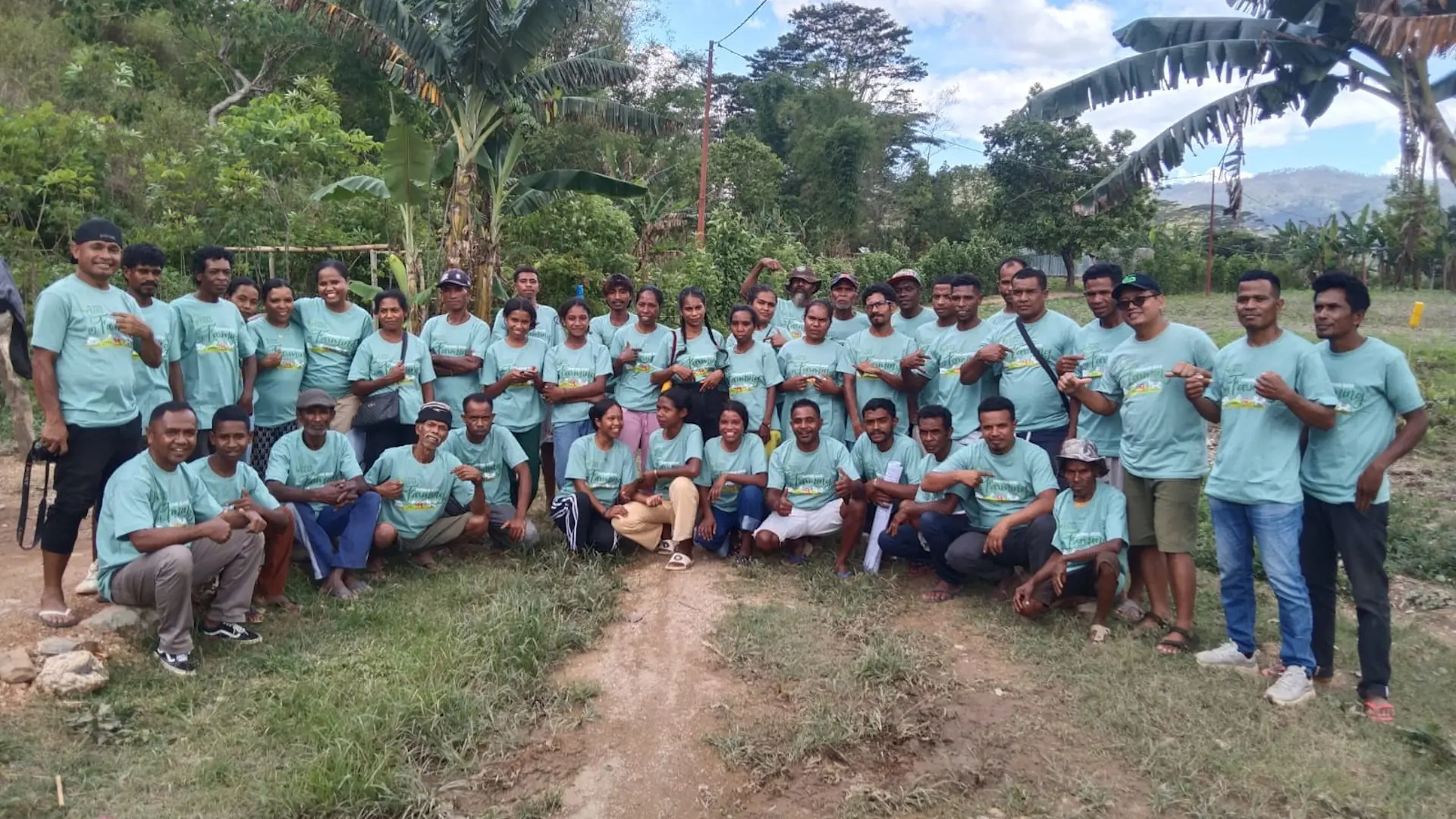
Hlalmeta community and JSS staff during a training in organic agriculture organised by KPTT Agriculture Course Centre and Jesuit Social Service Timor-Leste
Buber suggests an I-Thou relationship, in which the other is a “You”, who deserves respect and care. This relationship recognises the other as valuable and therefore worthy of protection. Applied to nature, the I-Thou relationship can help rebuild a harmonious connection between human beings and the environment. Such awareness needs to be practised and taught from one generation to the next. Otherwise, the growing disconnect between humans and nature will continue to result in damage and crisis for both.
One way of cultivating ecological awareness is through agriculture. Agriculture offers a tangible way of encouraging people to care not only for plants and animals but also for abiotic factors, such as soil, water, air, and light, that sustain life. With this in mind, KPTT (Kursus Pertanian Taman Tani) Agriculture Course Centre in Salatiga collaborated with Jesuit Social Service (JSS) in Timor-Leste to conduct training in organic farming for residents of the Hlalmeta community and JSS staff from 29 November to 3 December.
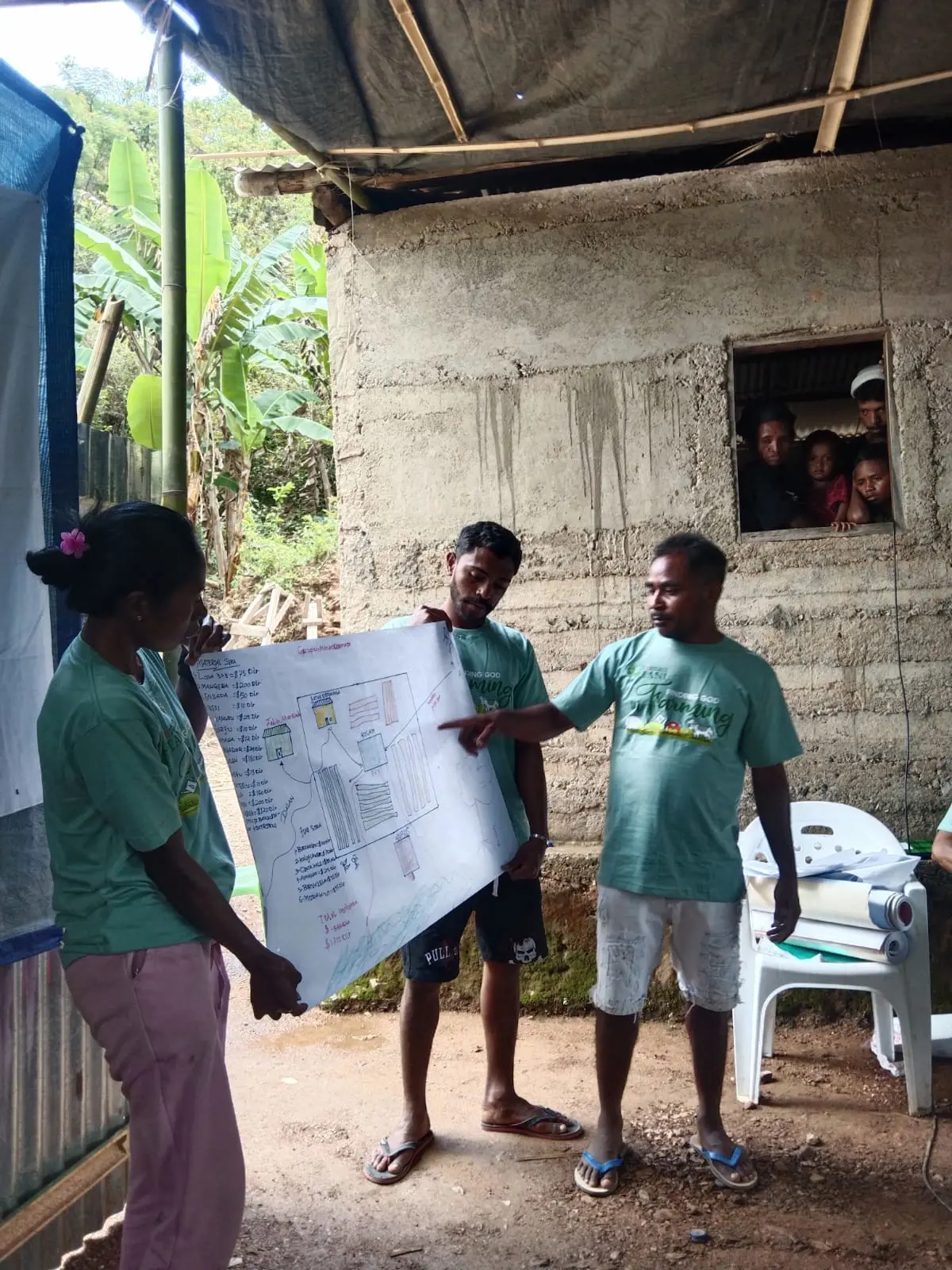 Agriculture in Timor-Leste is constrained by low soil fertility, lack of biodiversity, and insufficient infrastructure, including water sources and irrigation. Nevertheless, these limitations do not restrict the possibility of agricultural development. We have a grand vision of forming competent farmers, ensuring community food security, and improving economic welfare.
Sustainable agriculture depends on a fertile and diverse environment. Therefore, agricultural practices must be designed to be in harmony with their surroundings. At least four basic principles can be adopted from natural ecosystems: biodiversity, ecological balance, nutrient cycle, and soil fertility. These were the principles taught to the course participants. By the end of the training, they had developed a strategic plan for starting sustainable and integrated agricultural practices. Through this effort, we hope that agricultural practices and knowledge in Timor-Leste will continue to develop, improve community welfare, and foster better ecological awareness.
In Indonesia, there is a saying, “My home is my palace.” The word “ecology” comes from the Greek word oikos, meaning home. As a place of residence, a palace must be maintained—cleaned, cared for, and made more beautiful. Likewise, the Earth as our shared home must be treated with the same care that a family gives to its own household.
Let us start to take care of the Earth, because it is our home. We are all members of a family, and the family is the smallest social unit that shapes the wider society.